
Survive the End
How to Craft Final Girls For Modern Times

**Spoilers for Clown in a Cornfield**
No matter the generation, the perennial appeal of teenage slasher stories remains intact. The 80s had Halloween, A Nightmare on Elm Street, and Friday the 13th, the 90s had Scream, I Know What You Did Last Summer, and Freddy vs. Jason, the 2010s had The Gallows, The Final Girls, and Happy Death Day, the 2020s (so far) has Fear Street, Time Cut, and now, Clown in a Cornfield.
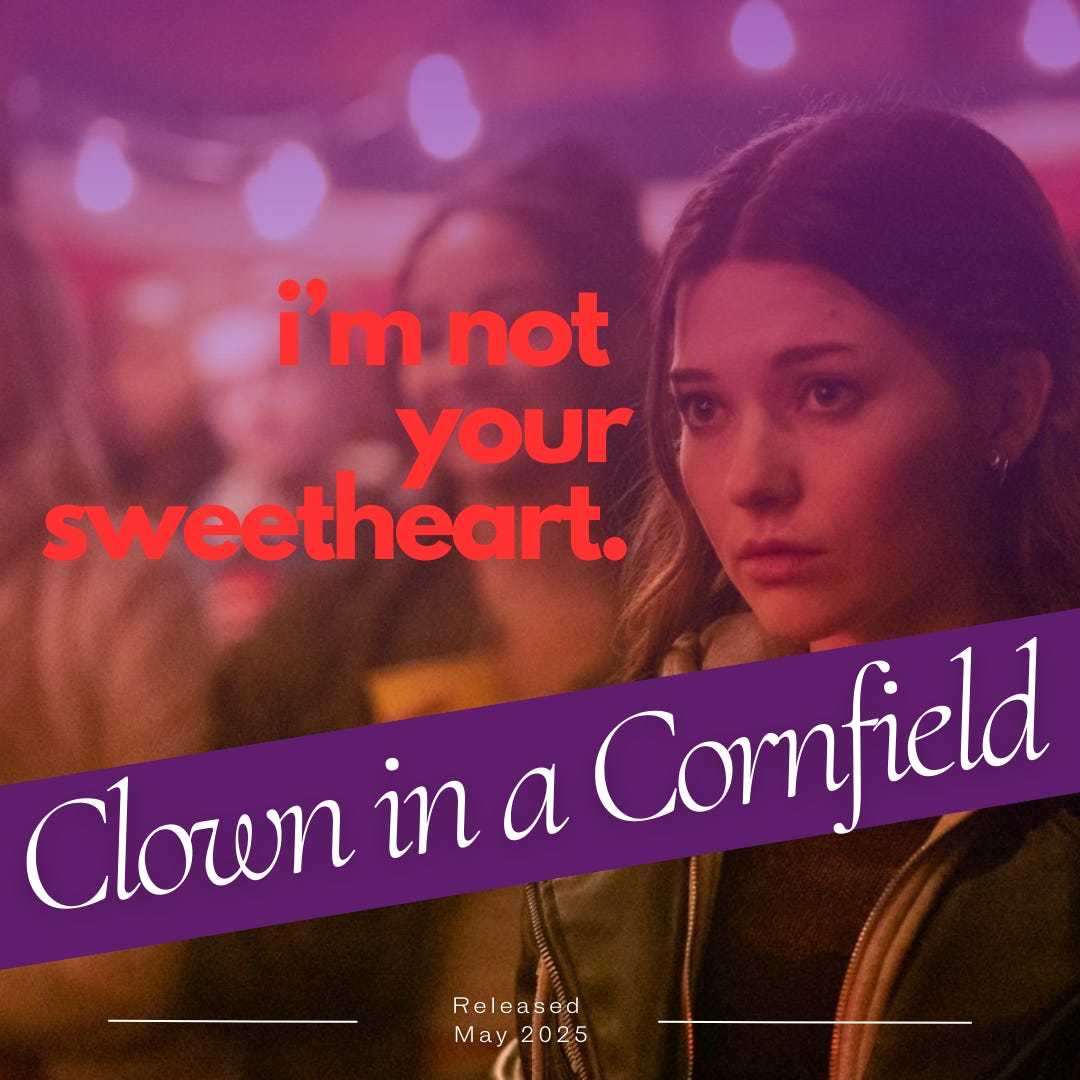
So why do these types of tales prevail?
While I’m sure there are further psychological and sociological implications dissected in scholarly research, there is something more simplistic: Teenagers are young adults. Meaning, they feel all the impending doom of adulthood with less autonomy than actual adults. Mix this into any story that depicts teens being slaughtered one after the next, and you have the perfect breeding ground to expose the nuance of this era of life.
The final girls of today, however, have changed, albeit slightly. Now, they have more substance. The real shift from teenage babysitter and gratuitous topless shots toward leading ladies with a more complete personhood came with Sidney in Scream. That legacy continues today.
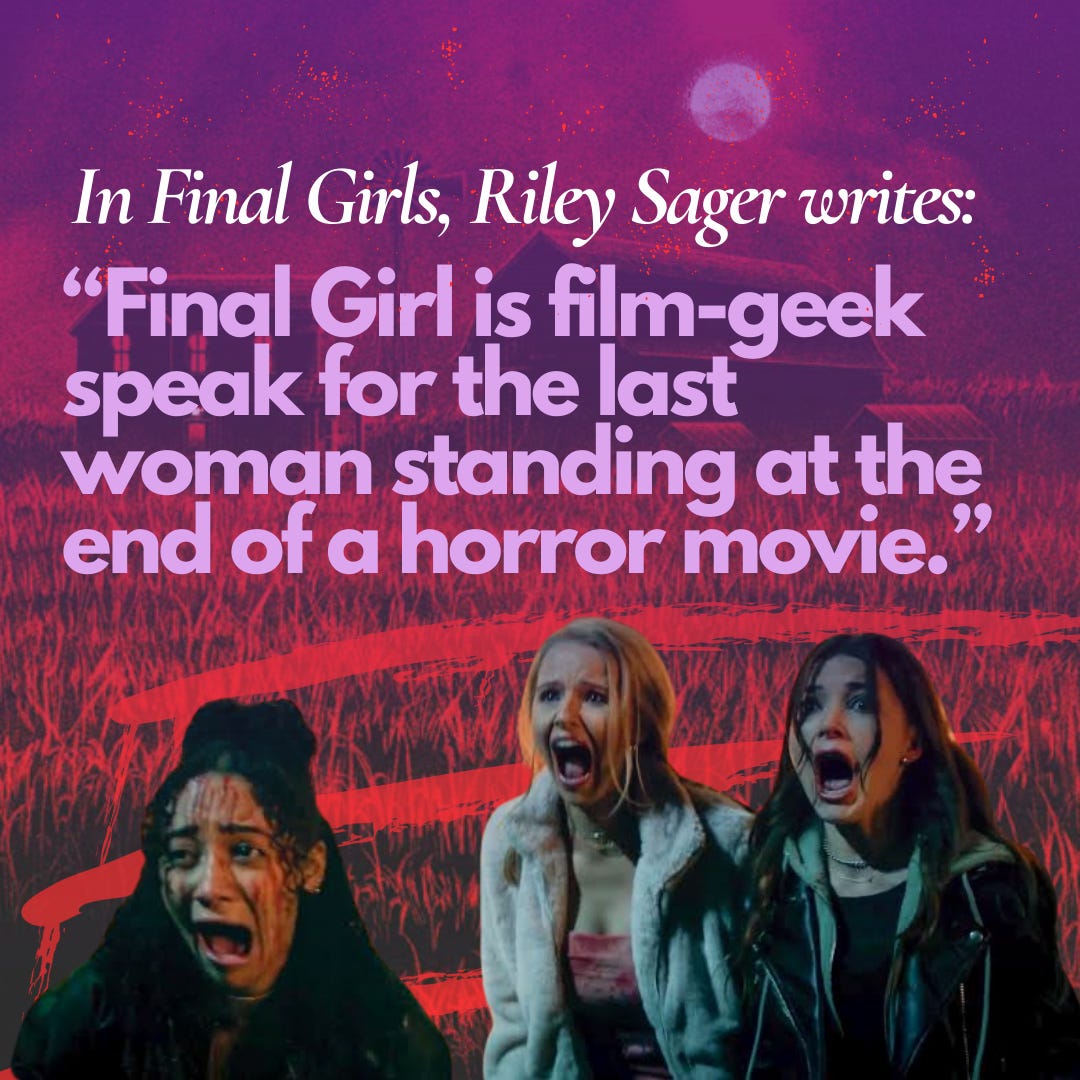
As we examine this in the context of Clown in a Cornfield, it becomes clear that there are specific tactics you can use for this kind of storytelling at its finest, no matter the medium.
With Clown in a Cornfield, much of what was written in the script derives from source material. I do think it’s worth noting that I did not enjoy this book. Personally, I found the characters insufferable, the dialogue did not feel natural, more like an adult trying to sound like a cool teen. I guess as authors writing YA, that’s always the challenge. I do wonder if this novel is meant to toe the line of satire, what with its political undertones and the Us vs. Them feeling of the narrative. But I did not find this emphasized enough within the book to be considered such.
In contrast, its filmic counterpart consistently hit that sweet spot between depicting the intensity of horrific deaths and the much needed levity of a good laugh. And looking at this from a high-level scope, it’s clear there’s not just one thing that makes this modern final girl. This is a multi-layered process, which means you can pull as many elements into your stories to craft your own final girl.
Keep in mind, it’s not just about surviving. For this to feel impactful, audiences must first understand the origins of the character.
Character Backstory:
Quinn Maybrook arrives to Kettle Springs with her dad. From the jump, he seems to be struggling. We learn that Quinn’s mother died of an overdose the summer before and her dad couldn’t deal with the stress of working in the ER.
Cue sleepy small town.
Tragedy or not, we need to understand that our characters have some kind of motivation before survival takes over. And for Quinn, getting through the last year of high school in a new town and spotty WiFi, well, that’s key.
And through this, Quinn finds herself falling in with the badseeds, a group of misunderstood teens who fill their time with making homemade horror films for Youtube. At the surface, they’re like any other group of friends. Aside from Cole Hale, heir to the Baypen Corn empire in town, we don’t get much in the way of backstory for the other characters. They do seem to fall more into the tropes of other horror films, which may be lacking for some viewers, but is consistent with this genre.
At least with Cole, it’s clear the death of his sister the summer before maintains a significant impact on how he navigates the world now. In the film, this creates just enough tragedy for Cole to feel endearing to both the audience and Quinn. She feels understood in her grief and it doesn’t take long before Quinn’s dad is breaking up their makeout session in Cole’s car.
When crafting your own characters, you may consider connecting them with tragedy. Or maybe it’s enough to have that same group of friends nervous about starting college, under the same pressures from their parents, etc. When it comes to this teenage era of life, the oppressors are plentiful.
At the end of the story, your audience wants to care about their final girl. They want someone to root for and they want to understand why.
While some of the other elements that follow may not be as integral to your stories, this is something that should be a non-negotiable. Clown in a Cornfield gives the audience just enough without bogging down the pacing or taking away from the kills. We also meet another side character, Rust, who has a mysterious history with Cole that the other friends allude to, and I am not ashamed to say that my love of Scream did immediately raise my suspicions of both Rust AND Cole as possible killers.
Romantic Tension:
This may be something you choose to omit from your story. But in most teenage dramas, slasher or not, there is an undercurrent of romance. That blend of saying goodbye to childhood and the friends and relationships of that time, as well as heightened hormones and societal pressures truly makes this an element worth pursuing. It feels so distinctly high school for a reason.
This is something that Clown in a Cornfield handled well between Quinn and Cole. I bought their budding romance. And their new relationship added an extra layer of fear for each other during the initial barn party massacre.
While perhaps this is not as integral an element as it is in Scream, the similarities between Cole and Billy feel like an intentional homage. Specifically with their boyish faces, long locks, bad boy persona—they both cross over into heartthrob territory, even if (or maybe because) their existence sounds like Taylor Swift’s I Can Fix Him (No Really I Can).

But as we dissect the how behind crafting final girls for modern times, it’s important to note that audiences want to see something different, something fresh, something that aligns with the diversity of today’s world, and maybe just maybe, passes the Bechdel Test. And so, as we see something off when Quinn tries to hook-up with Cole at the barn party, there is an element of tension setting in.
Soon after bloodshed and horrific deaths, we learn that Cole is gay. He wasn’t just friends with Rust. They were something more. This feels like a breath of fresh air in a modern story. And for the love of Chuck Tingle, we finally got a chance to stop burying our gays, as both Rust and Cole make it out alive in the end.
As the romantic tension eases, we’re fully in the middle of a massacre and all that surrounds our final girl and her friends is the pinnacle of Kettle Springs: the cornfield.
Setting:
This is different for every slasher story. A NightMare on Elm Street had dreamscapes, Friday the 13th had Camp Crystal Lake, The Gallows had the theater, Halloween, Scream, I Know What You Did Last Summer, Fear Street, and Time Cut all had small towns.
Following suit, Clown in a Cornfield takes place in another small town. Most often in teenage slashers, the setting is depicted in a claustrophobic manner such as dreams, summer camp, theater, small towns. These are all insular spaces, making the characters and audience feel like there is no place to run or hide from the threat of the killer.
For this element, we will dismiss the newest Scream movie in the franchise, as it does take place in a city, and manages the space well. But alas, this is a one off and may not have been rendered as successfully by a debut story.
Within Kettle Springs, there’s the cornfield and farmland, one decent restaurant, the school, a barn, and a burned out factory. Not much else populates this landscape. And again, this claustrophobia adds further tension for the audience, developing our modern final girl. She must do the best with what she has if she wishes to survive the end.
As this is a film, the visual elements also contribute toward this feeling of small spaces, as many scenes are filled in close-up, purposefully omitting certain parts of the character’s line of sight to further build the tension. While this is something that would be more difficult to utilize in a written medium, the constricting feel will push the final girl into a more intense act of fight or flight, forcing her to eventually face the killer(s).
Generational Divide:
The prevalence of a generational divide remains a distinct part of teenage slashers. With our protagonists not being legal adults yet, it quickly becomes a guessing game of which elders can and cannot be trusted. Often enough, adults may not believe there’s anything happening until the bodies begin piling up. And this discrediting will only widen the chasm between generations.
Throughout the film, Quinn’s dad doesn’t believe that a teacher or police officer is against her new friends, instead believing that she has earned her punishment. In doing so, he forces Quinn to omit certain truths, leading to her sneaking out to the barn party.
This tension is taken one step further by not only questioning who our crew can trust, but by pitting our teens against nearly every adult, even those who should be there to help, like the police. Disguised as Frendo the Clown, our killers specifically target the youth as a means to cull the town of rot. Or, so they say.
The mayor explains the murders have been a grand tradition on Founder’s Day every few decades. All the while, his own son, Cole, dangles from a noose. It’s from this precarious position that Cole transitions into a monologue. And in his words, there is a message that rings beyond the cornfields of Kettle Springs. Sometimes, adult hate kids because they represent change and those who are older may not be willing to bend or capable of change. Cole lists the dying environment, the lack of empathy, their overall hatred for his generation, all the while identifying the adults inability to understand as the real issue.
Sound familiar?
In our own world, generations are at odds with one another. Millennials have been and still are despised and criticized. Gen Z is touted as being the laziest generation, despite the fact that they’ve lived in a society of fear and heartbreak and instability. Cole’s monologue is genius. Layering the generational divide within the context of the horror genre is even better.
The lessons you can take from how this element was handled in Clown in a Cornfield are two-fold: play with the trustworthiness of adults and sneak in deeper meanings within the gore.
Make the deaths matter.
Survive the End:
If your main character doesn’t survive, then she is not a final girl. As such, this is the most important element. Getting characters over this finish line can be done in any fashion, but just like Quinn, you will want to introduce tension and stakes throughout.
Not only is Quinn consistently in opposition with her father, but then killer clowns start hunting her from the barn party, through the cornfield, into the farmhouse. And it’s here that Quinn offers some much needed humor, not knowing how a rotary phone works. The film is allowed to poke fun at the generation because it’s not all for naught. Doing so propels the plot and further intensifies the situation. She has no service and cannot call for help.
Later, Quinn is unable to escape because she doesn’t know how to drive stick shift. Again, things aren’t going perfectly for her. Quite the opposite, in fact, as she finds herself tied up and being shocked repeatedly by the deputy while the mayor casually talks about killing his only son.
The events continue to put Quinn in harm’s way, but she overcomes. That’s what final girls do in the end. So, if you are looking to craft a similar character, consider adding in some levity despite the situation. Let her continue to fight even when all odds are against her, even when she’s scared, most especially when she’s terrified.
In the end, teenage slashers force young adults to face their own mortality, something not many of them are accustomed to doing. At this age, those brains aren’t done cooking yet, and they feel like their days will be infinite. As they approach adulthood, they are forced to kill their childhood, to let go of the versions of themselves they once were. And this genre of film stands as a tangible reminder of what must be done, forcing them to reconcile those big existential questions about purpose that perhaps only happen introspectively.
As you continue to modernize these tropes and elements in your own stories, your characters should feel the weight of all the final girls who came before, but push ever onward to survive the end.
All best,
Kayla King